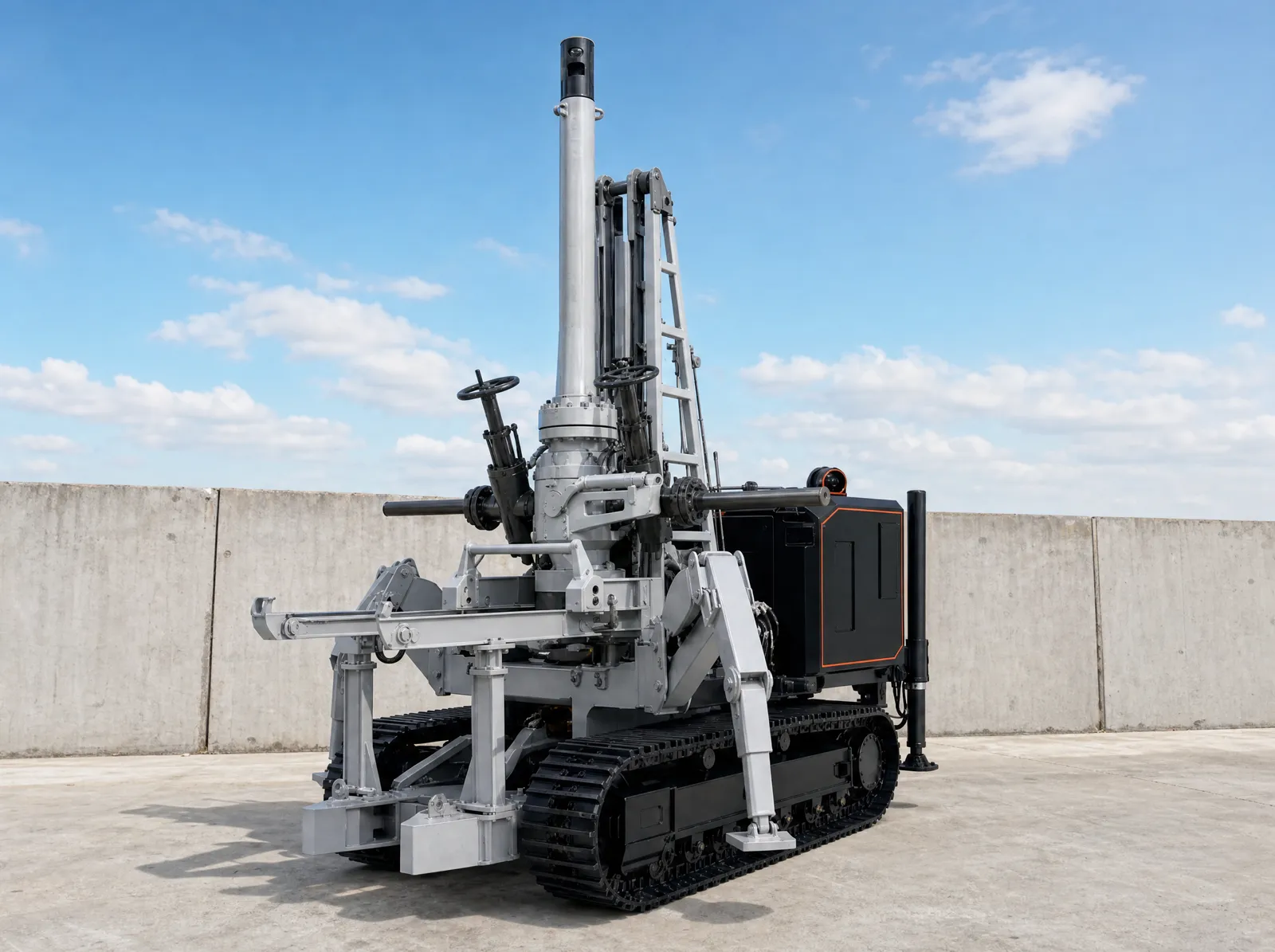
Wellhead response platform
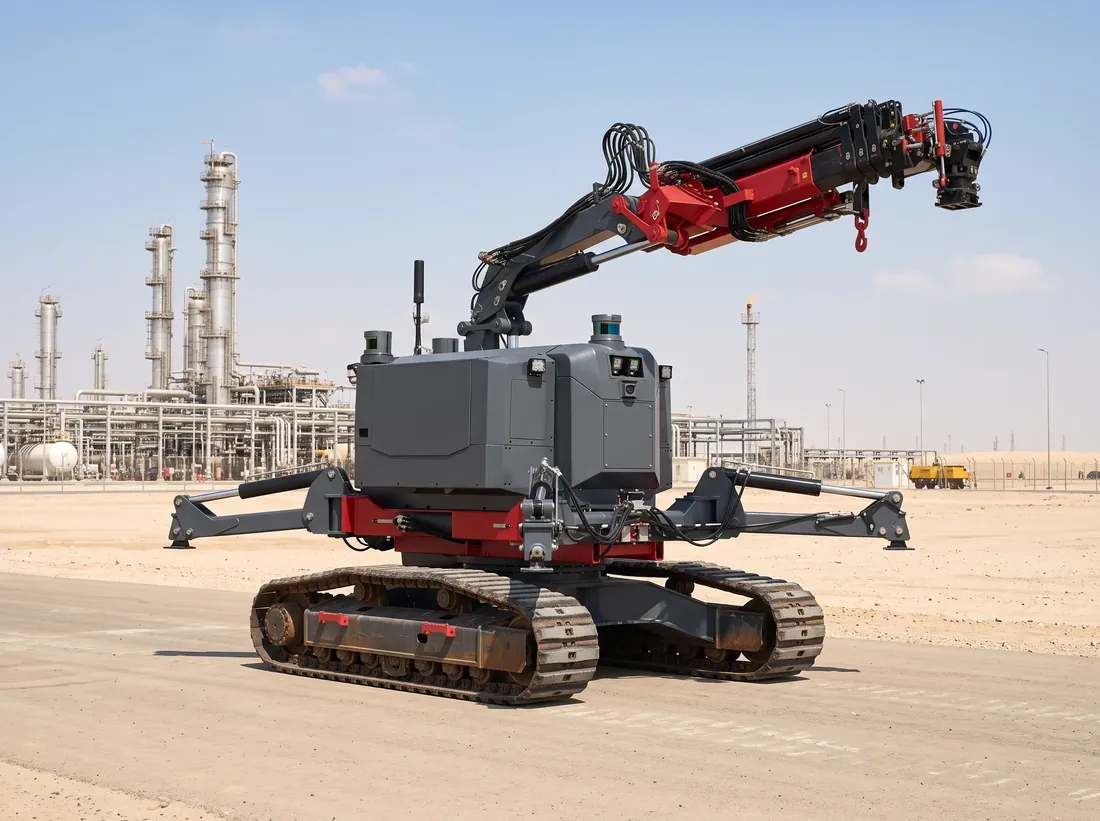
A tracked platform built around a mast-mounted valve-handling assembly and a folding hydraulic grapple, with deployable stabilizer legs for working directly against a live wellhead.
Equipment catalog
We don't sell one machine for every scenario. Reach, attachment capacity and chassis width are matched to the task before anything ships — these are the platforms that make up the current fleet.
A tracked platform built around a mast-mounted valve-handling assembly and a folding hydraulic grapple, with deployable stabilizer legs for working directly against a live wellhead.
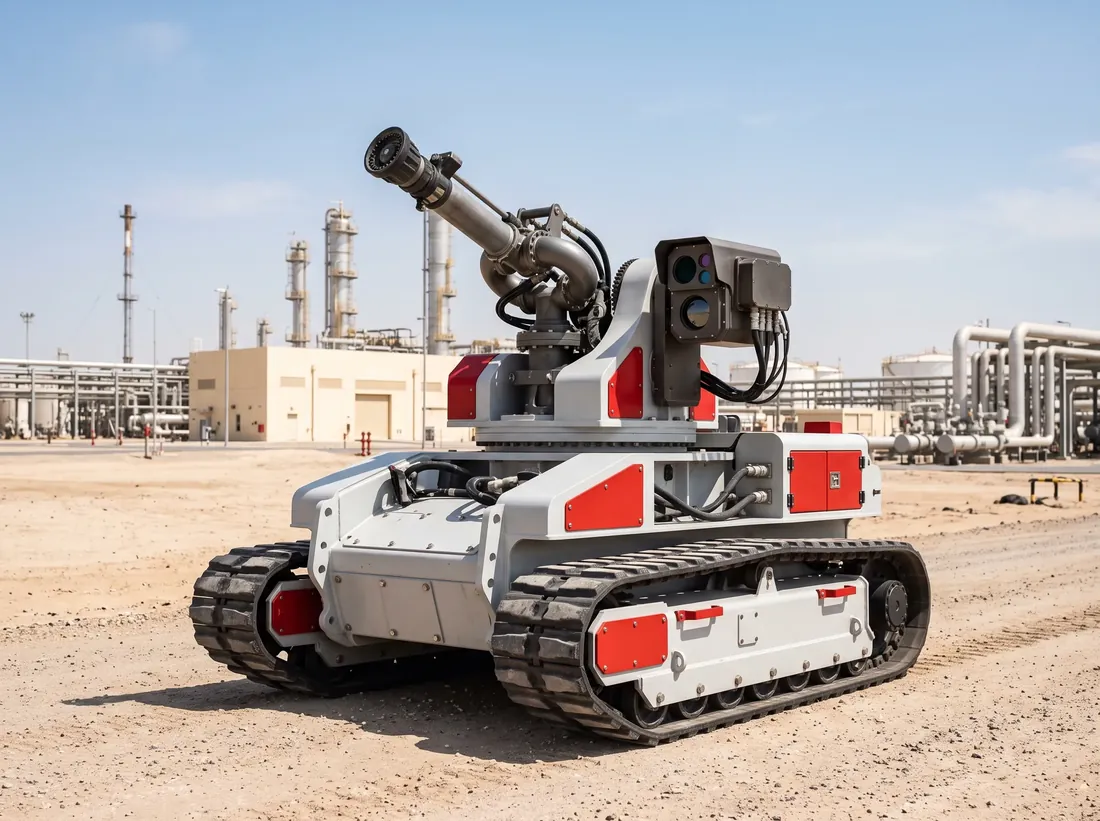
A heavy tracked platform built around a single high-volume monitor on a powered turret, throwing a stream well beyond the heat radius — for fires too large or too distant for hose lines alone.
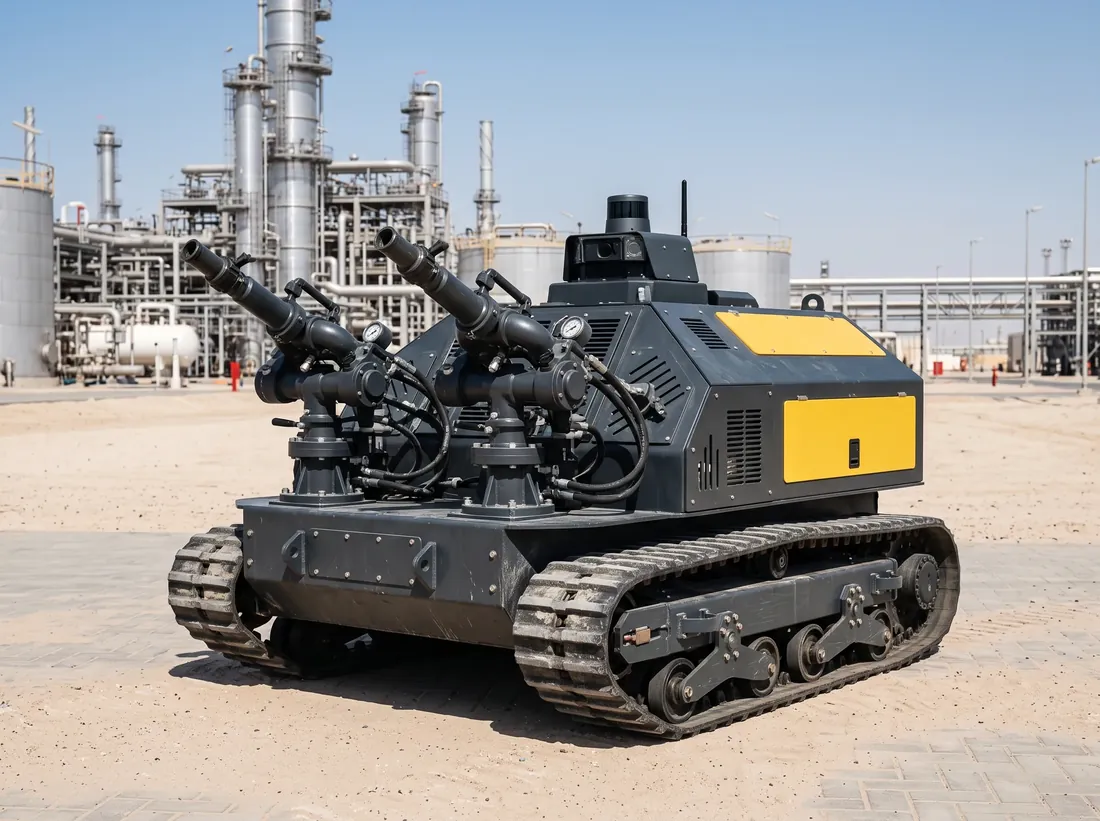
A mid-size tracked platform carrying two independently aimed monitors, able to split a single pump feed into two streams or concentrate both on one target — sized for congested process units where a single wide monitor can't get a clean line of sight.
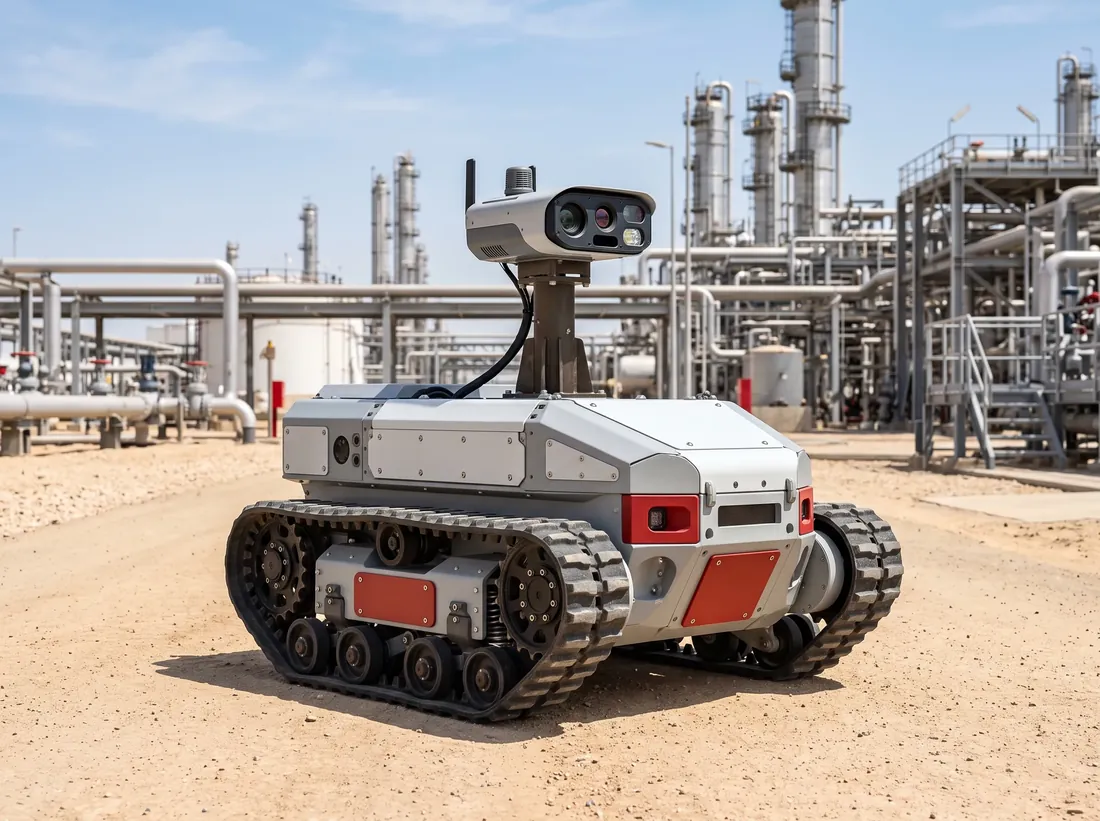
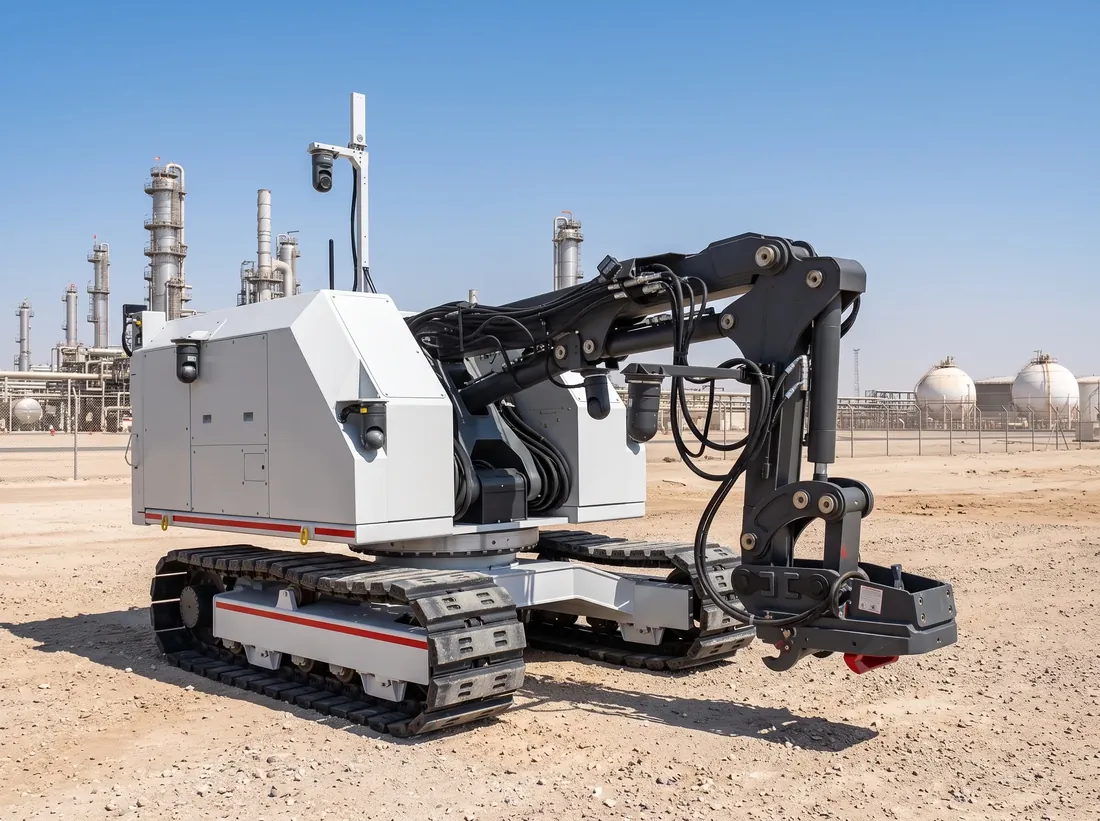
A low, narrow tracked platform carrying a vertical sensor mast — built to be the first thing into a space before any person follows.
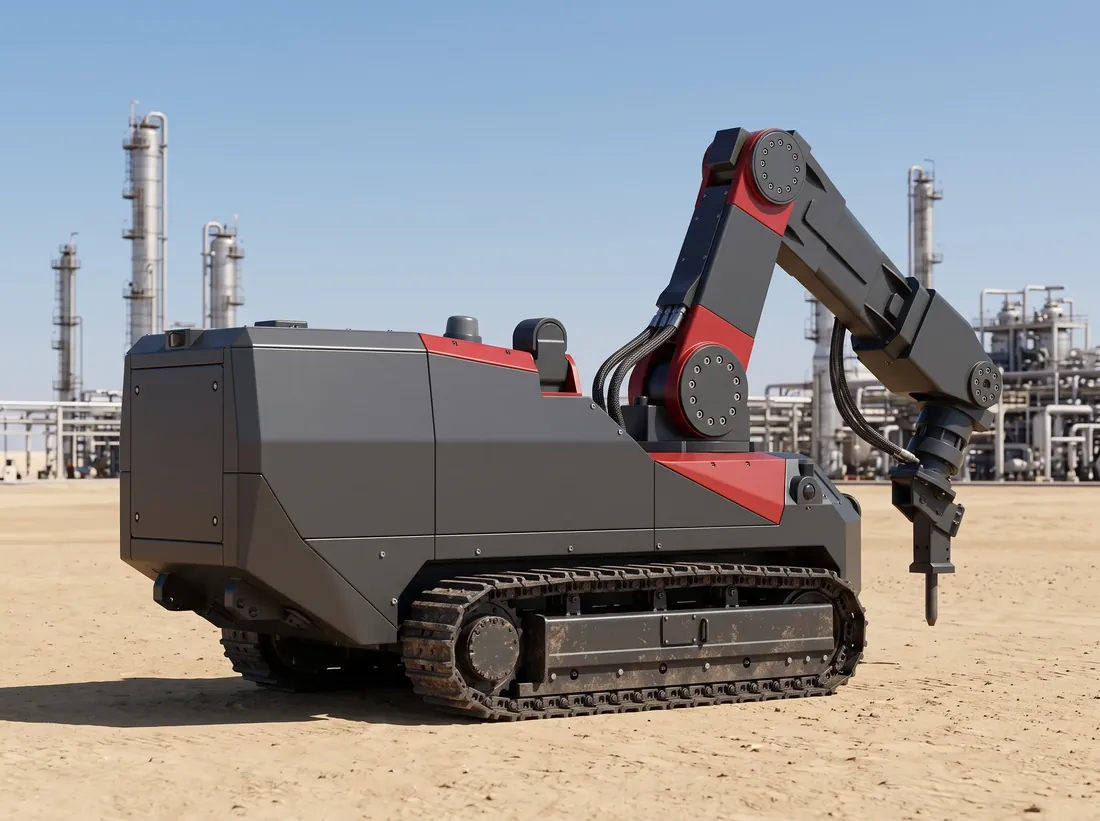
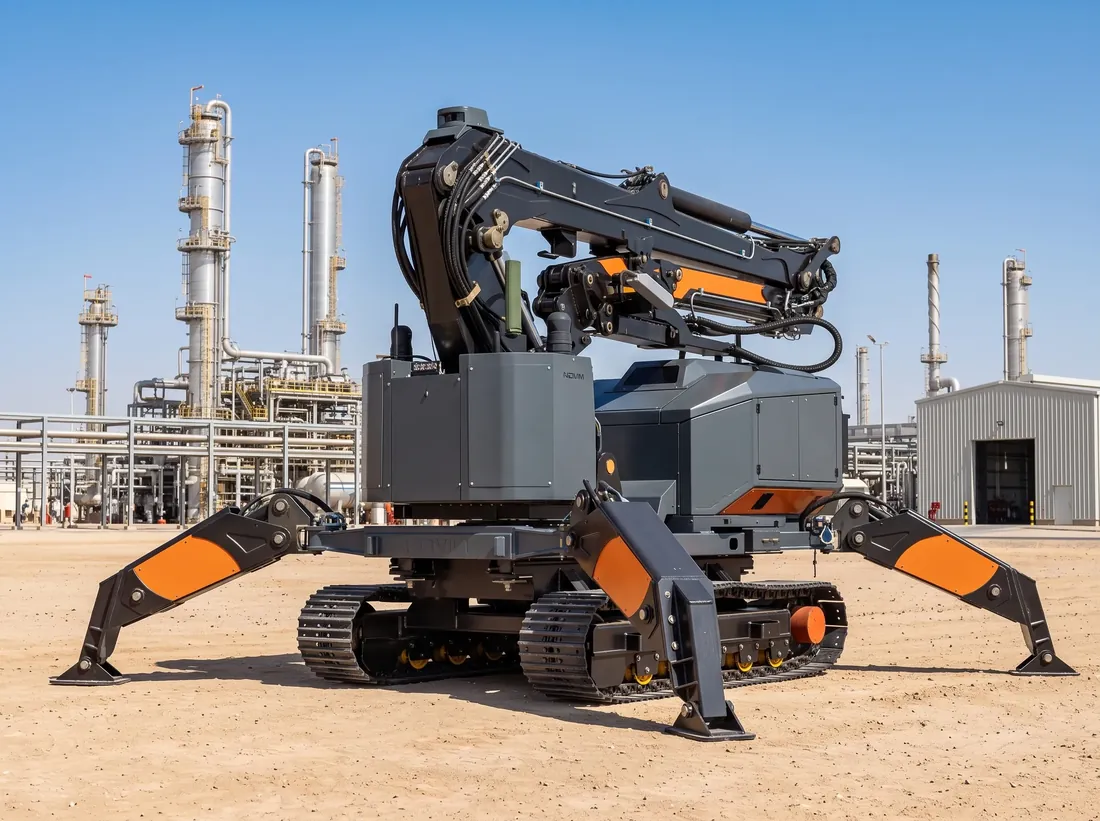
A narrow tracked base carrying a multi-joint hydraulic arm — sized to move through corridors and doorways a larger rig can't reach.
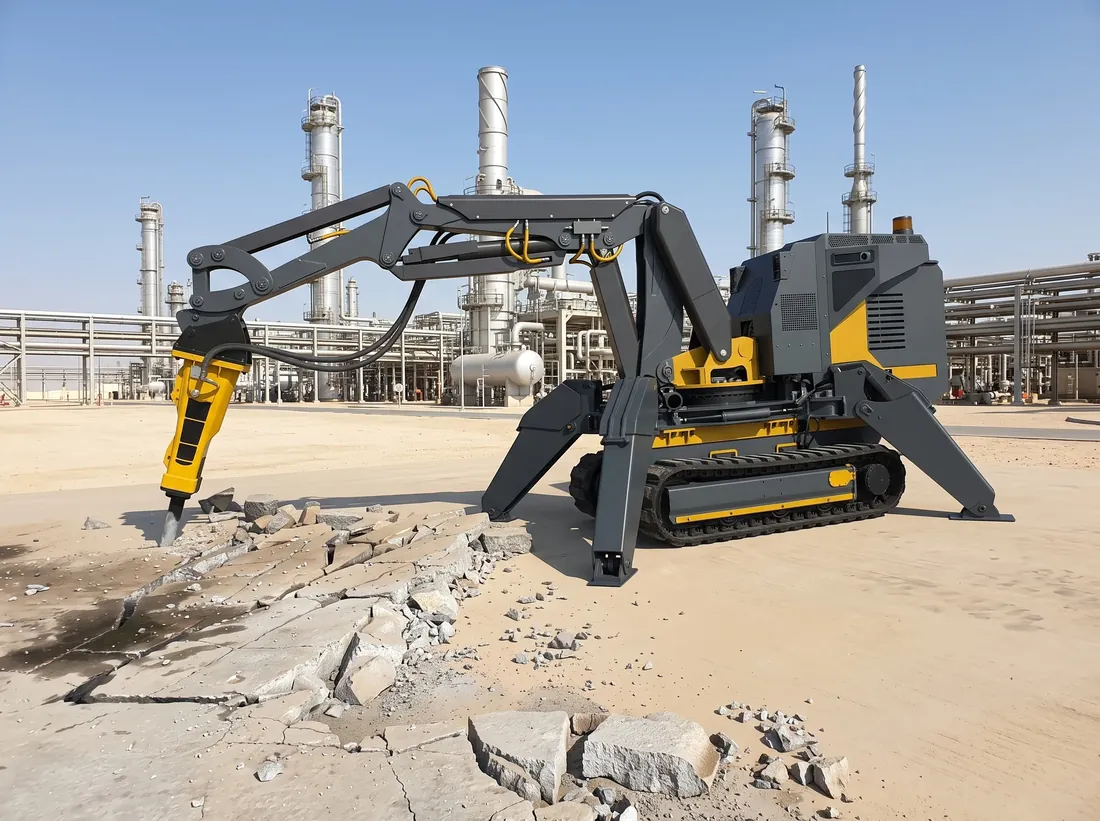
A low chassis with adjustable splayed outriggers and a hydraulic breaker boom, including an electric-drive option for indoor work.
An 8-camera night-vision platform with a long boom and a swappable tool set, built to keep working in contaminated or radiation-affected areas.
A long-boom platform rated to work across an unusually wide temperature range, with shielding for elevated-exposure environments.
The same manipulator head can be mounted on a tracked, truck or rail-adjacent chassis, with self-loading capability for moving between sites.
Most of the fleet is built around a common mounting interface rather than a fixed tool. The same chassis can move between roles as the job changes — these are the four module families we configure most often.
Single or dual water/foam monitor heads, sized for tank-farm throw distance or tight process-unit aiming.
Camera, thermal imaging and gas-detection sensor blocks for inspection ahead of entry.
Grippers, hydraulic hammers, shears and valve-handling tools for demolition and mechanical intervention.
Hose, cable and tool carriers for keeping a deployment supplied without a second vehicle.
Match the scenario to your actual risk first — fire suppression, wellhead, reconnaissance or remote work — the nine platforms above split cleanly along those four lines.
Inside a category, what usually decides it is chassis width for the corridors and doorways you need to clear, load or throw-distance for what you're actually lifting, breaking or reaching, and control range for how far back the operator needs to stand.
The scenario review decides. That's the first step of how we work — it exists specifically for the cases where a catalog page can't make the call for you.